Restaurant Business Scaling Strategies
- 3 days ago
- 2 min read
Scaling a restaurant brand is often misunderstood as simply duplicating your physical kitchen or launching in a new pin code. In reality, expanding without a robust operational system is the fastest way to dilute your food quality, experience severe margin leakage, and burn capital.

Whether you manage a quick-service restaurant (QSR) chain or are looking at cloud kitchen expansion, sustainable growth requires building highly efficient, repeatable systems. To grow restaurant business India effectively, you must focus on scalable infrastructure that protects your bottom line across all digital and physical touchpoints.
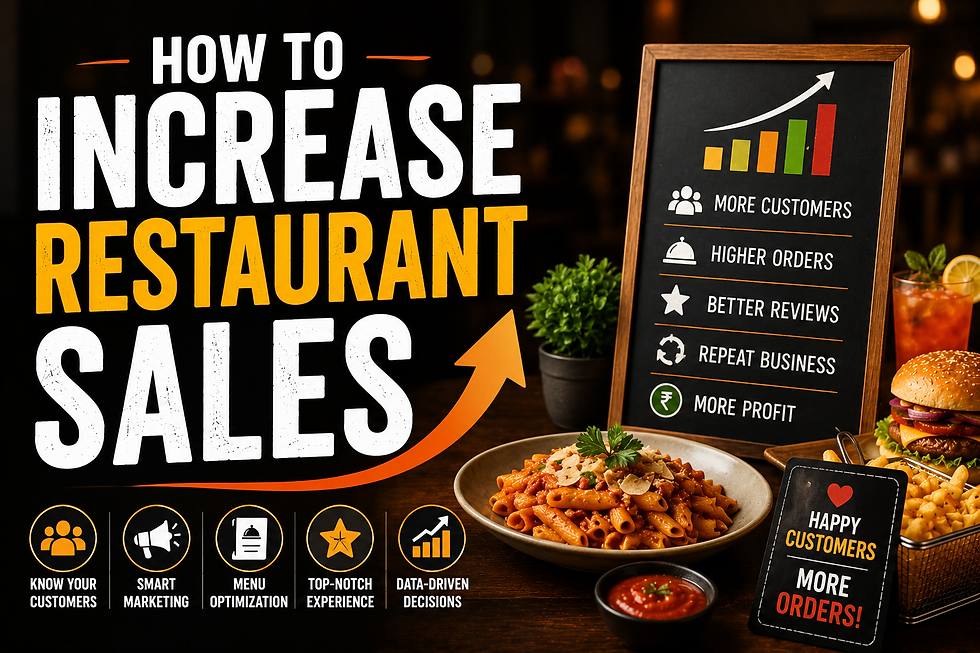
Core Scaling Strategies for Modern Brands
Standardization of Operations: You cannot scale what you cannot replicate. Establish strict Standard Operating Procedures (SOPs) for inventory management, recipe preparation, and delivery packaging. Every dish leaving a new kitchen must taste and look identical to the original outlet.
Menu Optimization for Scale: A massive, 100-item menu is impossible to scale efficiently across multiple locations. Trim your menu to focus on high-margin, high-demand items with low preparation times. Reducing your SKU (Stock Keeping Unit) count simplifies supply chains and cuts down on food waste.
Multi-Channel Online Presence: Diversify your income streams. Balance your presence across aggregators while building out your own direct ordering infrastructure via WhatsApp bots or a dedicated web app to capture first-party data and avoid high marketplace fees.
Brand Identity & Customer Retention: Scaling successfully means moving from a local neighborhood kitchen to a recognizable brand. Invest in consistent, premium packaging and an uncompromised customer experience to drive organic repeat orders, which lowers your long-term acquisition costs.
Data-Driven Decision Making: Scale requires rigorous metrics. Monitor your location-wise food costs, cart abandonment rates, and operational bottlenecks daily. Use platform data to dynamically adjust inventory and manpower based on peak demand periods.
The Aggregator Velocity Rule
Scaling across online platforms demands sharp operational efficiency. Aggregator algorithms on Zomato and Swiggy prioritize kitchens that demonstrate fast preparation times, low order cancellation rates, and highly consistent customer ratings.
A single poorly managed outlet with slow dispatch times or negative reviews can damage your overarching brand ranking. Executing a highly coordinated Zomato growth strategy requires clean metadata, search-optimized listings, and a flawlessly synchronized kitchen flow. When your operational funnel works smoothly, you naturally increase Swiggy sales and enjoy a compounding lift in organic visibility across every new catchment area you enter.
Laying the Foundation for Scale
True expansion isn’t about running faster; it’s about building a foundation that allows your business to run smoothly without you. By systemizing your kitchen operations, narrowing your menu focus, and leveraging data analytics, you can scale confidently without sacrificing your profit margins.
If you are ready to expand your footprint and transform your independent outlet into a high-yielding multi-location brand, you need specialized expertise. Partner with the consulting team at Spice Advisors to design your custom growth framework, optimize your digital storefronts, and successfully navigate your expansion roadmap. Reach out to Spice Advisors today for an expert scaling consultation.

Comments