Restaurant Sales Growth on Food Apps: The Ultimate Guide for F&B Businesses in 2026
- Feb 2
- 5 min read

In today’s digital age, food delivery apps have transformed the restaurant industry. What was once a simple dine-in business model has evolved into a multi-channel revenue ecosystem, where restaurant sales growth increasingly depends on online food apps like Zomato, Swiggy, Uber Eats, and proprietary restaurant apps. In this blog, we explore how restaurants can grow sales through food apps, the key drivers behind this growth, real-world numbers, and actionable strategies you can implement now.
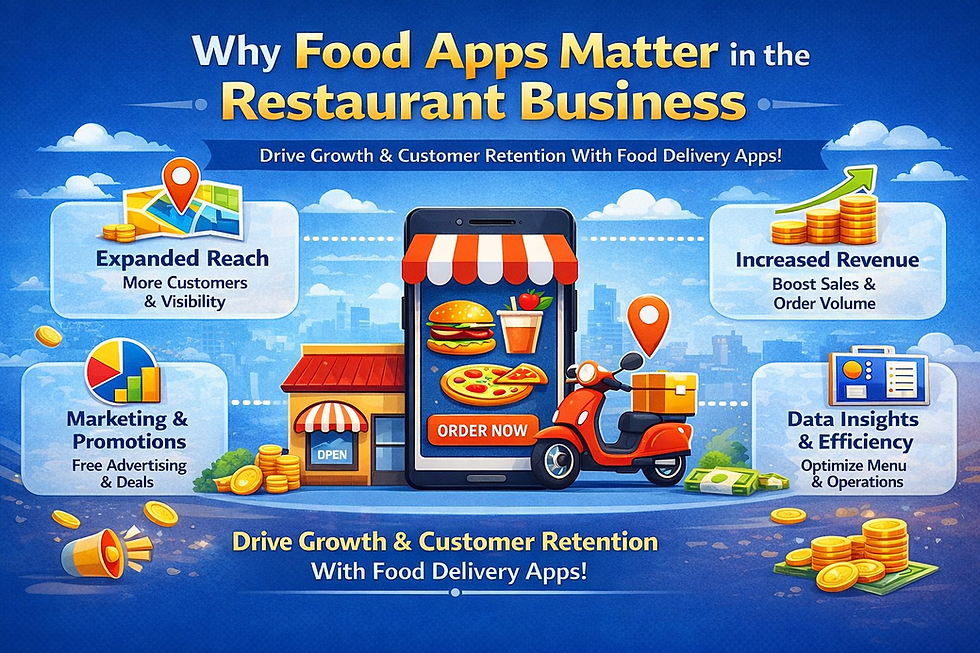
Why Food Apps Matter in the Restaurant Business
Mobile food delivery isn’t just convenient for customers — it’s a major revenue driver for restaurants. Over the past decade, food delivery platforms have reshaped customer behavior, driving demand for online ordering and doorstep delivery. According to industry data, delivery and takeout now represent a significant portion of total restaurant sales, compared with pre-digital eras.
In markets like India, app-based orders are growing rapidly. For example, Zomato projects its food delivery business to expand at around 30% annually over the next five years, driven by rising urban demand and expanding restaurant partnerships.
So what exactly makes food apps such a game-changer?
1. Expanded Customer Reach
One of the most compelling benefits of food delivery apps is greater visibility.
Traditional dine-in businesses are limited by geographic location — customers have to be physically nearby. In contrast, food apps allow restaurants to serve customers far beyond their immediate radius, effectively turning local eateries into digital brands. Platforms advertise restaurants to thousands (or millions) of users, helping you acquire new customers without heavy marketing spend.
Online ordering adoption has grown rapidly in India and globally, with data suggesting that online food delivery witnessed nearly 150% growth over recent years as restaurants and customers both embraced digital ordering.
Key takeaway: Food apps act like 24/7 digital storefronts — helping restaurants reach customers who might never visit the physical location.
2. Increased Sales and Revenue
Food apps unlock entirely new revenue streams for restaurants:
a) Higher Order Volume
Being listed on food apps instantly increases your order volume. A survey found that restaurants using delivery platforms often see a 20-30% increase in overall revenue within months of signing up.
b) Larger Average Order Value (AOV)
Apps also encourage upselling — options like add-ons (extra toppings, desserts, drinks) and combo offers increase the average order value. Some restaurants report AOV growth of 15–22% with smart upsell features.
c) New Operational Hours
Food apps enable orders outside traditional dine-in hours — even late at night or during slow periods — bringing in revenue restaurants would otherwise miss.
3. Operational Efficiencies and Cost Control
Contrary to what many think, digital ordering doesn’t just boost revenue — it also improves efficiency.
Food apps usually integrate with your point-of-sale (POS) systems and kitchen management systems, automating order processing and reducing manual errors. This streamlines operations, reduces labor costs, and allows kitchens to handle a higher volume of orders with the same staff.
Additionally, restaurants save on phone order coordination and reduce miscommunication, which improves both speed and customer satisfaction.
4. Improved Customer Loyalty & Retention
Repeat customers are the backbone of any restaurant’s profitability. Food delivery apps help build loyalty through:
In-app rewards and loyalty programs
Push notifications for offers and new dishes
Personalized suggestions based on past orders
Ratings and reviews that promote trust and social proof
A seamless ordering experience encourages diners to return, increasing customer lifetime value (CLV) and long-term sales growth.
5. Marketing and Promotion Benefits
Food apps invest heavily in marketing. When you partner with a delivery platform, you benefit from:
Featured listings (e.g., “Trending Near You”)
In-app promotions and banners
Deals and discount campaigns
Sponsored placement opportunities
This is essentially free advertising that gets your restaurant in front of a large, engaged audience — potentially driving orders without any extra cost on your part.
6. Data-Driven Growth Strategies
Another powerful advantage of food apps is the data they provide.
Apps show you:
Peak order times
Popular menu items
Customer purchasing patterns
Feedback and ratings
This data can help you optimize your menu, experiment with pricing, tailor marketing campaigns, and manage inventory more efficiently — all of which contribute to higher sales and profitability.
Case Study Highlights: Real Growth Stories
Little Caesars
By partnering with DoorDash, Little Caesars boosted delivery sales by around 30% within six months, streamlining delivery and focusing on speed and availability.
Fazoli’s

Similarly, Fazoli’s saw a 30% increase in sales in just the first month of partnering with food delivery platforms — highlighting the immediate impact these apps can have.
These examples show that integrating with delivery apps isn’t just a trend — it’s a growth strategy with measurable results.
7. Strategic Tips for Maximizing Growth on Food Apps
Listing your restaurant is just the first step. To truly grow sales, implement these strategies:
1) Optimize Your Menu for Online Ordering
Highlight best-sellers, update descriptions, and use high-quality images. Clear, appealing menus improve conversion.
2) Offer Exclusive App Deals
Discounts or bundle offers exclusive to app users can drive more orders and increase repeat purchases.
3) Leverage Analytics
Use app data to identify slow periods and create targeted promotions.
4) Focus on Reviews and Ratings
Encourage happy customers to leave reviews — higher ratings boost visibility and trust.
5) Explore Multiple Platforms
Don’t rely on just one app. Being on multiple platforms broadens your reach and minimizes dependence on a single partner.
Challenges to Be Aware Of
While food apps offer massive opportunities, there are some challenges:
Commission Fees: Third-party platforms charge commissions, which can squeeze margins.
Competition: The digital marketplace is crowded; you must stand out.
Delivery Costs: High delivery charges can deter customers — consider offering pickup incentives or bundled deals.
Despite these hurdles, smart pricing, menu optimization, and a strong digital strategy help restaurants mitigate costs and still achieve significant growth.
The Future Is Digital: Trends to Watch
Here are trends shaping the next phase of restaurant sales growth:
AI and Personalization
Artificial intelligence is being used in apps to suggest dishes, customize recommendations, and increase engagement.
Cloud Kitchens & Virtual Brands
Delivery-only kitchens reduce overhead and optimize for online sales — a major trend worldwide.
Subscription Models
Some apps now offer meal subscriptions, curated plans, or daily deals that help restaurants secure regular customers.
Conclusion
Food delivery apps have reshaped the restaurant industry — turning physical locations into digital sales engines. By expanding customer reach, boosting revenue, improving operational efficiency, and providing powerful data insights, these platforms offer restaurants the tools they need to grow sales in an increasingly competitive landscape.
Whether you're a small cafe or a multi-location restaurant group, embracing digital ordering through food apps is no longer optional — it’s essential for sustainable growth in 2026 and beyond.


Comments